Debris piles up fast on a build, and a crew loses time hauling it off in truckloads. Dumpster rentals in Brookline, MO solve that with an on-site container that holds the waste, gets swapped when it fills, and hauls off on schedule. Brookline sits in southwest Greene County along the I-44 and Route 66 corridor, near Republic and the airport. Its mix of farmland, warehousing, and new construction keeps larger containers in steady demand.
A dumpster rental supplies a roll-off container to a residential or commercial site, keeps it there through the work, and hauls the load to a permitted facility. The flat rate bundles delivery, pickup, a weight allowance, and disposal. On job sites, containers also get emptied and returned so work continues without a gap.
Jobsite rentals turn on weight, access, and turnaround more than anything else. A few points set expectations early.
Volume and weight are two different limits, and heavy trades hit the weight cap first. A 30-yard box may look half empty when a concrete or shingle load already sits at its ton allowance.
Splitting the stream helps. Concrete, brick, and dirt load better in a smaller, dedicated container, while wood, drywall, and general debris fill the large box. Planning that split before the crew starts loading keeps the disposal cost predictable and avoids a surprise at the scale. On a phased build, a smaller fill box early and a large debris box later often works better than one container for the whole job.
A clear site is a safer site, and debris control is a working requirement on construction jobs. Scrap lumber with protruding nails and loose refuse create real hazards in walkways and stairs.
Safety rules call for debris to be cleared from work areas and removed at regular intervals during construction. An on-site container gives a crew a single place to consolidate that waste, which keeps passageways open and speeds the final cleanup. Comparing dumpster rentals by capacity helps match the box to the debris a trade produces.
Most jobsite debris loads without trouble, though weight limits apply to the heavy material.
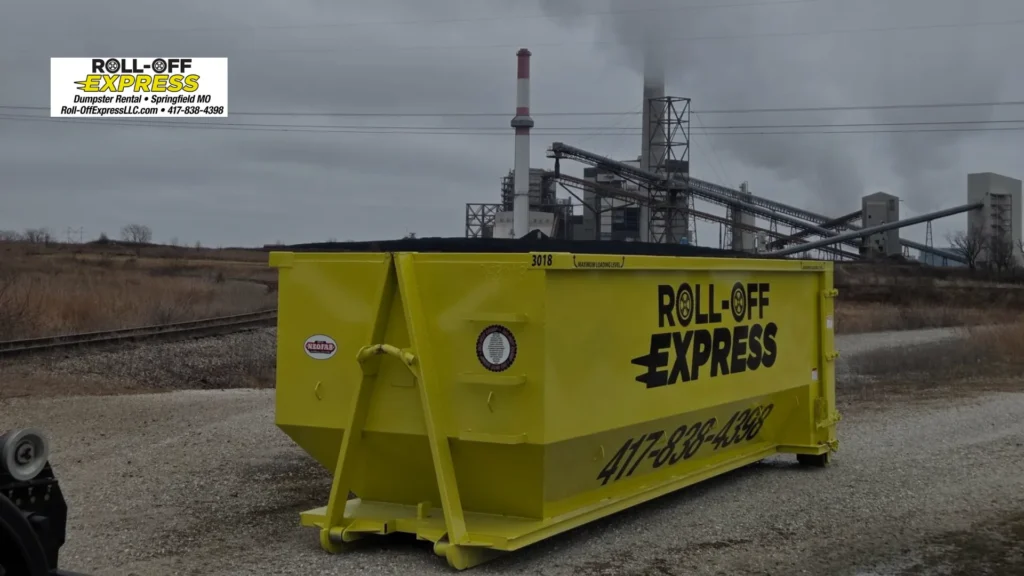
Framing lumber, drywall, siding, flooring, and general demo debris fill a large box fast. A 30-yard container covers most mid-size commercial and residential jobs.
Shingles, felt, and flashing load are heavy, so a roofing tear-off often needs a smaller container run at a lower fill line to stay under the ton cap.
Concrete, brick, block, and dirt carry the most weight per cubic foot and usually ride in a separate, dedicated load. Running clean fill in its own container also keeps it eligible for reuse rather than straight landfill disposal.
Timing on a job site runs on phases rather than a single drop and pull. A container arrives when debris starts and cycles as the work moves.
Empty-and-return service covers the phases between, so a crew never stops to wait on disposal. A quick call the day before a swap keeps the cycle tight on an active site.
Contractors ask about turnaround and weight before anything else.
Yes. Empty-and-return service pulls a full box and drops an empty one, which keeps a multi-phase job moving.
A 30-yard container handles most commercial cleanouts and new construction. Very heavy debris may need a smaller box run at a lower fill line.
Weight past the included tons is billed per ton. Splitting concrete and fill into a separate load usually costs less than one overweight haul.
Same-day or next-day delivery is often available, which matters when a schedule depends on a clear work area.
Coverage runs across southwest Greene County and the towns along the I-44 corridor.
A container sized to the trade, split from heavy fill, and cycled on schedule keeps a Brookline project on pace and the work area clear. Matching capacity to the debris a phase produces is the part worth planning. Roll-Off Express lists container sizes and the full service map, and 417-838-4398 reaches someone who can set a delivery around a build schedule.
Roll-Off Express | LETS TALK TRASH | Dumpster Rentals